
Meniscus tear physio in Canning Town, East London
Physio Athletic treats meniscus tears in Canning Town, East London, whether you are managing yours without surgery, recovering from a repair, or recovering from a trim. Your programme follows your treatment path and your surgeon's protocol, tracked with force plate and strength testing rather than a fixed timeline. Start with a free call.
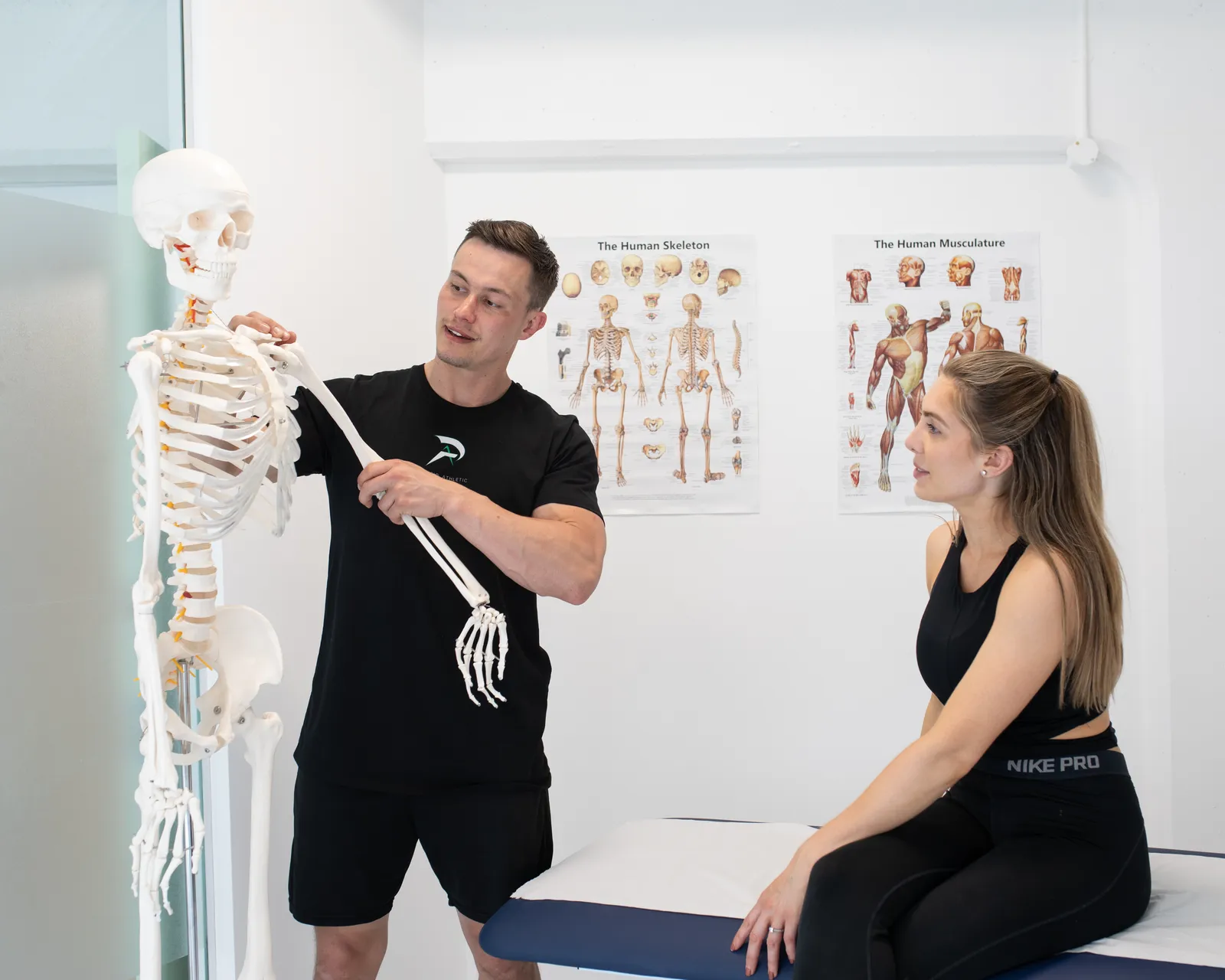
Is this you?
- You twisted your knee and it hurts, swells, catches or feels like it gives way
- A scan or doctor has mentioned a meniscus tear
- You want to know whether rehab without surgery could work for you
- You have had a meniscus repair or trim and need rehab afterwards
- You play sport, run or train in the gym and want to get back to it
What is a meniscus tear?
The menisci are two wedges of cartilage that sit between your thigh bone and shin bone. They spread load across the joint, absorb shock and help the knee stay stable as it bends and turns. A meniscus tear is a split in that cartilage, and the effect it has depends far more on where the tear is and what pattern it follows than on the word tear itself.
Torn your meniscus? The right treatment path, and the right rehab, depends on more than just the tear itself.
How a meniscus tear usually happens
There are two broad routes. The first is a twisting injury, often with the foot planted and the knee bent, which is common in football, rugby, skiing and racket sports and tends to affect younger people. The second is gradual wear, where the cartilage becomes less resilient over time and tears during something ordinary such as squatting or getting up awkwardly. The two behave differently and are usually managed differently.
Common signs of a meniscus tear
Pain along the joint line, swelling that builds over a day or so, and a knee that catches, clicks or feels like it gives way are the signs people report most often. Deep bending, squatting and twisting are usually the movements that provoke it.
If your knee locks and you physically cannot straighten it, get it looked at promptly rather than waiting to see if it settles, as a locked knee can indicate a tear pattern that needs prompt surgical review.
Do I need surgery for a meniscus tear?
Not always. Whether surgery is the right option depends on the type, size and location of your tear, your age, and your goals. Some meniscus tears respond well to a structured non-surgical rehab programme, while others genuinely need repair or partial removal. We can guide you through this after assessment, alongside your surgeon or consultant where relevant.
Not every meniscus tear needs surgery, and not every surgical meniscus repair follows the same recovery. At Physio Athletic in Canning Town, we build your programme around your specific tear, your treatment path and your goals, tracked with objective testing at every stage.
Will surgery put me at risk of osteoarthritis?
This is a genuine consideration, not just a worry to dismiss. Removing meniscus tissue, which is what a meniscectomy does, reduces some of the knee's natural shock absorption, and that is linked to a higher long-term risk of osteoarthritis, generally more so the more tissue is removed. This is part of why repair is often preferred over removal when the tear pattern allows it, and it is a conversation worth having directly with your surgeon about your specific tear.
Good rehab, meaning rebuilding strength and movement quality around the joint, also plays a real role in protecting your knee long-term, whichever path you take.
Other knee problems we see
A meniscus tear often does not arrive on its own. We regularly see it alongside an ACL injury, and we also treat runner's knee, patellar tendon pain and knee pain that builds up from training load.
How we treat it
-
Free call
A short call to talk through your injury and check that physio is the right first step. No commitment.
-
45-minute assessment
We take a full history, test your knee's movement, strength and stability, and explain your options, including whether a scan or surgical opinion is needed.
-
Your rehab plan
A plan in stages with clear goals, built around strength work in our on-site gym and exercises between sessions.
-
Back to running, lifting and sport
We build you back up gradually and use testing to check you are ready for the demands of your sport.
Meniscus recovery by treatment path
Meniscus recovery looks different depending on how your tear is being managed.
-
Meniscectomy, or trim
Typically 6 to 12 weeks back to normal activity
Recovery is typically faster, and most patients are back to normal activity within 6 to 12 weeks. Rehab focuses on rebuilding strength and load tolerance around the joint, so the muscles are doing their share of the work protecting your knee.
-
Meniscus repair
Longer, and led by your surgeon's protocol
This takes longer, because the repaired tissue needs time to heal properly. We typically work toward heavier strengthening around 3 to 4 months, with plyometrics and running introduced later still. The exact pace is guided by your surgeon's specific protocol, which we follow closely rather than applying a generic timeline.
-
Managing it conservatively
Individual, and led by your symptoms
There is no fixed pattern here. Recovery is highly individual, based on your symptoms, function and goals, and we build your plan around how you are actually responding rather than a set schedule.
How we assess a meniscus tear
Every meniscus patient starts with a full clinical assessment, to understand your specific tear and how it is affecting movement and function.
Decisions about your rehab are based on measurements, not guesswork. On site we have:
- VALD ForceDecks force plates, to compare force and power between your legs in jumps and landings.
- DynaMo strength testing, to measure the strength of individual muscle groups and track it over time.
- An on-site gym inside Sculpt & Sweat Studio, so your rehab uses real training equipment.
Whichever path you are on, we use VALD force plate and dynamometer testing to track strength symmetry, force output and landing mechanics as you progress. This gives us objective data on how your knee is actually performing, rather than relying on how many weeks have passed, so decisions about progressing your rehab are backed by evidence rather than guesswork.
If you are recovering from surgery, we also work directly from your surgeon's protocol. Meniscus repairs in particular need careful, staged loading while the tissue heals, and timelines vary depending on the type and location of repair. We do not run a generic recovery plan; we follow what your surgeon has specified for your case, guided by testing along the way.
If you are managing your meniscus conservatively, or you have had a meniscectomy, your rehab is built around your symptoms, function and goals rather than a surgical healing timeline, with testing tracking your progress throughout.
Who you'll see
-

Founder & Specialist MSK Physiotherapist · BSc, HCPC, MCSP, AACP
-
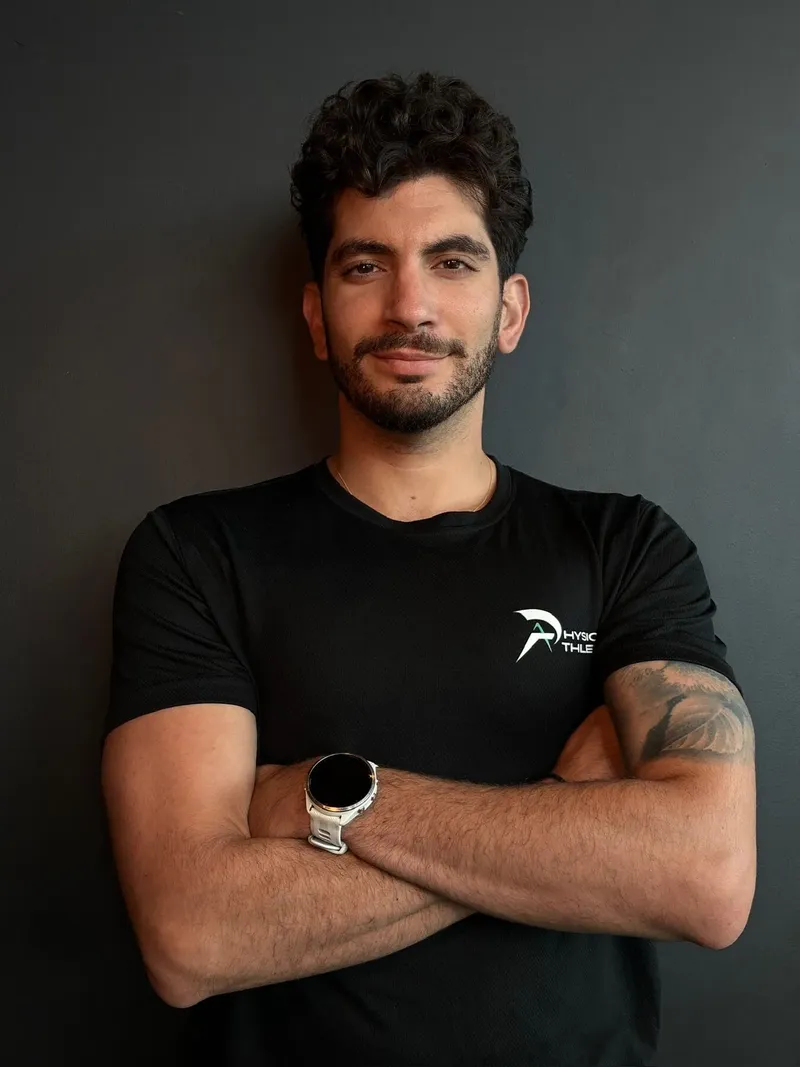
Senior Physiotherapist
Working with your surgeon
We work with leading London knee surgeons and follow your surgeon's protocol after a repair or trim. If your assessment suggests a surgical opinion would help, we explain why and help you arrange one.
Using your health insurance
We are registered with Bupa, AXA, WPA, Cigna and Vitality. Contact your insurer first to get an authorisation code, then book with us and we bill your insurer directly. Some insurers ask for a GP referral before they authorise treatment.




What our knee patients say
The whole gym and studio feels very welcoming, and it made my ACL and meniscal tear recovery journey post-surgery so much less intimidating. I was kept informed throughout each step of the rehab, and listened to whenever I had questions or concerns. I started rehab with Josh from 1 week post-surgery, when I could barely walk, and I was able to run a 10k in less than 12 months.
Meniscus tear questions
Can a meniscus tear heal without surgery?
Some can, and many more can be managed well without an operation even when the tear itself does not fully heal. The outer part of the meniscus has a blood supply and some capacity to heal, while the inner part has very little. Where a tear sits in a stable pattern and the knee is not locking, a structured rehab programme that rebuilds strength and load tolerance around the joint is often tried first. Whether that is right for your tear depends on its type, size and location.
Do I need surgery for a meniscus tear?
Not always. It depends on the type, size and location of your tear, your age, and your goals. Some meniscus tears respond well to a structured non-surgical rehab programme, while others genuinely need repair or partial removal. A knee that locks and will not straighten is the clearest reason to get a prompt surgical opinion. We guide you through this after assessment, alongside your surgeon or consultant where relevant.
How long does a meniscus tear take to recover?
It depends entirely on your treatment path. After a meniscectomy, most patients are back to normal activity within 6 to 12 weeks. After a repair it takes longer, because the repaired tissue has to heal, and heavier strength work typically starts around 3 to 4 months with running later still, guided by your surgeon's protocol. If you are managing the tear conservatively there is no fixed pattern, and progress is judged on your symptoms and testing.
Is a meniscus tear serious?
Most meniscus tears are not an emergency, and plenty of people get back to full activity. The two things that warrant prompt attention are a knee that locks and will not straighten, and a tear that comes with other damage in the knee such as an ACL injury, as both change what treatment is appropriate. The long-term consideration is protecting the joint, which is why preserving meniscus tissue and rebuilding strength around the knee both matter.
Can I walk or run with a meniscus tear?
Most people can walk with a meniscus tear, though it may be uncomfortable on stairs, when squatting or when twisting. Running is a separate question and depends on your treatment path. After a meniscectomy many patients are back to normal activity within 6 to 12 weeks. After a repair, running is introduced considerably later and only when your surgeon's protocol allows. If you are managing the tear conservatively, it varies patient to patient.
Can I still squat or go to the gym?
Usually yes, with adjustments rather than a complete stop. Deep squatting and heavily loaded twisting tend to be the most provocative movements early on, so we change depth, load and tempo rather than removing lower body training altogether. Continuing to train the knee is part of the treatment, because the muscles around the joint take load off the meniscus.
Which exercises should I avoid with a meniscus tear?
There is no universal list, because it depends on your tear and where you are in recovery. In the early stages, deep knee bend under load, twisting on a planted foot and high-impact work are the usual ones to modify. After a repair your surgeon's protocol may specify limits on how far you bend the knee and how much weight you take through it. We work out your own list at the assessment rather than applying a generic one.
Do I need physio after meniscus surgery?
Surgery addresses the tear, but it does not rebuild the strength and control you lost around the knee, and that is what determines how the joint copes afterwards. Rehab after a trim focuses on restoring strength and load tolerance fairly quickly. Rehab after a repair is staged more carefully while the tissue heals, following your surgeon's protocol.
Do I need an MRI before I see a physio?
No. We assess the knee clinically first, and that is usually enough to plan the early stages of treatment. A scan matters when it would change the decision, for example when the knee locks, when a repair is being considered, or when another structure such as the ACL may be involved. If your assessment suggests a scan or a surgical opinion would help, we explain why and help you arrange it.
Is meniscus surgery painful?
Most patients manage post-surgical discomfort well with the pain relief your surgical team provides, and it typically settles significantly within the first couple of weeks. Everyone's experience differs, but it is rarely the ordeal people fear going in, and we will guide you through what to expect at each stage of recovery.
I have torn my ACL and meniscus. Which page is for me?
Start with the ACL page, as the ACL reconstruction usually sets the overall shape and timeline of the programme. The meniscus work is built into it, and a repaired meniscus generally means the early phases are more protected, with limits on how far you bend and load the knee while the tissue heals. We work from your surgeon's protocol either way.
How many sessions will I need?
It depends on your treatment path and how you respond, so we give you an honest estimate after the assessment rather than selling a fixed block up front. Rehab after a trim is typically shorter than rehab after a repair. Much of the work happens in your own training between appointments, and part of our job is to get you to the point where you no longer need us.
Will my insurance cover it?
We are registered with Bupa, AXA, WPA, Cigna and Vitality. Contact your insurer first to get an authorisation code, then book with us and we bill your insurer directly. Some insurers ask for a GP referral before they authorise treatment.
Get your knee assessed
If you are not sure whether your meniscus tear needs surgery, or you are weighing up repair versus a quicker recovery path, that is exactly the kind of decision an assessment helps with. We will look at your specific tear, talk through the options, and help you understand what each path actually means for your recovery and your goals.
Whether you are deciding on treatment, recovering from surgery, or managing your meniscus conservatively, we will build your plan around exactly where you are at.
Not sure which appointment you need? Call us for a free chat and we'll point you in the right direction.
Getting here
Physio Athletic
Inside Sculpt & Sweat StudioUnit 2 Hoola, 5 Tidal Basin Road
Canning Town, London E16 1UX
- Nearest stations: Royal Victoria (DLR) and Custom House (Elizabeth line)
- Paid street parking nearby
- Please note the clinic is not step-free
Opening hours
- Monday–Thursday
- 07:00–21:00
- Friday
- 08:00–21:00
- Saturday
- 08:00–17:00
- Sunday
- 10:00–17:00