
Rotator cuff and shoulder physio in Canning Town, East London
Physio Athletic treats rotator cuff and shoulder injuries in Canning Town, East London, whether you are managing yours without surgery or recovering from a repair. Most shoulder problems we see never need an operation. Your programme is tracked with dynamometer strength testing rather than a fixed timeline. Start with a free call.
Is this you?
- You lift weights and your shoulder hurts on pressing or overhead work
- You play tennis, padel or swim and your shoulder is holding you back
- You work at a desk and have shoulder pain that will not settle
- You have been told you have a rotator cuff tear, or you have had shoulder surgery
What is the rotator cuff?
The rotator cuff is a group of four muscles and their tendons that wrap around the top of the arm bone and hold it centred in the shoulder socket. The shoulder trades stability for range of movement, so the cuff is doing constant work to keep the joint controlled through everything from reaching a shelf to a bench press.
Shoulder pain that will not settle, or a confirmed rotator cuff tear? Whether you are managing it without surgery or recovering from a repair, the way your shoulder is loaded in the early weeks matters more than almost anything else in your recovery.
Tendon pain and tears
Most shoulder pain in this area is tendon pain rather than a tear: the tendon has been loaded more than it can currently tolerate and has become sensitive. A tear means fibres have actually parted, either gradually with age or suddenly through an injury. The distinction matters less than people expect, because both are managed by rebuilding the shoulder's capacity to take load, and plenty of people have tears on a scan with no symptoms at all.
What "impingement" usually means
Impingement was the standard label for pain when lifting the arm, and many people arrive having been given it. Current thinking treats it as a description of a symptom rather than a diagnosis in itself, because the pain usually comes down to a tendon that is irritable and a shoulder that is not controlling load well. That is a more useful starting point, because both respond to training.
Do I need surgery for a rotator cuff injury?
Most shoulder pain and rotator cuff problems do not need surgery, and managing conservatively is the path most of our rotator cuff patients take. For many people, a structured strengthening programme resolves pain and restores function without an operation.
Surgery tends to be considered for large or traumatic tears, and where a well-run rehabilitation programme has not changed things. It is a decision made with you and your surgeon, not one a physiotherapist makes on your behalf. A proper assessment is the best way to find out what is actually going on and what your options are.
Training with a shoulder injury
In most cases you keep training, with changes rather than a full stop. Overhead pressing and wide-grip work are usually the first things to adjust, and there is normally plenty you can still load heavily, including legs, hinge patterns and most pulling. Continuing to train matters, because the shoulder gets its capacity back by being loaded, not by being rested indefinitely.
If you have had a repair, this is different: the early weeks are protective by design and your surgeon's protocol sets what you can do. We work to that rather than to a general rule.
How we treat it
-
Free call
A short call to talk through your injury and check that physio is the right first step. No commitment.
-
45-minute assessment
We take a full history, test your shoulder's movement and strength, and explain what we find and your options.
-
Rehab in stages
Goals for each stage, from settling pain to rebuilding strength, with DynaMo testing to track progress.
-
Back to lifting, racket sports and swimming
A gradual return to your training and sport. After surgery, we follow your surgeon's protocol.
Shoulder recovery by treatment path
Recovery looks different depending on whether your shoulder is being managed with or without surgery.
-
Managing conservatively, no surgery
Led by your symptoms, not a schedule
This is the path most of our rotator cuff patients take. Recovery is built around your specific symptoms and goals rather than a fixed schedule. For many people, a structured strengthening programme resolves pain and restores function without ever needing surgery.
-
After a repair: 0 to 2 weeks
Protecting the repair
Your shoulder stays in a sling, with only very gentle passive movement.
-
After a repair: 3 to 6 weeks
Regaining movement
Passive and assisted movement begins under guidance, working on regaining range of motion without loading the repair.
-
After a repair: 7 to 12 weeks
Active movement returns
Active movement returns and the sling typically comes off, with light strengthening introduced toward the end of this phase, once cleared by your surgeon.
-
After a repair: 3 to 6 months
Progressive strengthening
Strengthening ramps up. Overhead activity, swimming and racquet sports are typically reintroduced within this window.
-
After a repair: 6 to 12 months
Full return to sport and lifting
Full return to sport and heavy lifting, with larger repairs generally at the longer end of this range.
These timeframes are a guide. Your surgeon's specific protocol and how your shoulder is actually responding always take priority over a fixed schedule.
How we assess your shoulder
Every rotator cuff patient starts with a full clinical assessment of the shoulder, covering strength, range of motion, and how the injury is affecting daily life and activity.
Decisions about your rehab are based on measurements, not guesswork. On site we have:
- VALD ForceDecks force plates, to compare force and power between your legs in jumps and landings.
- DynaMo strength testing, to measure the strength of individual muscle groups and track it over time.
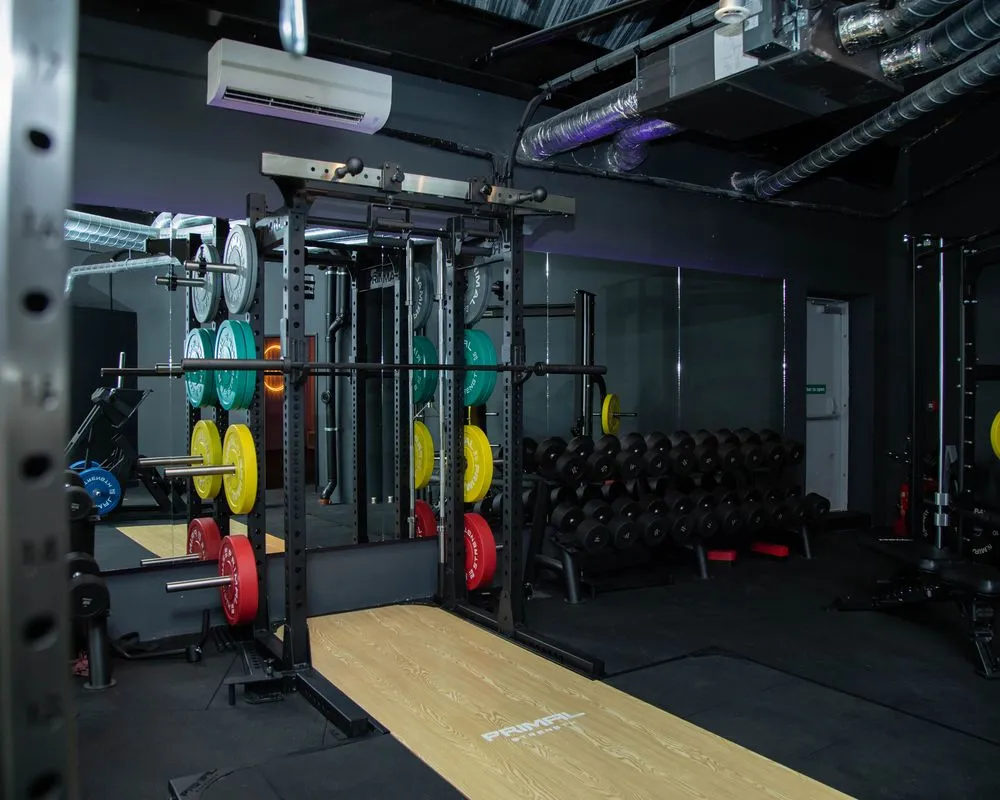
- An on-site gym inside Sculpt & Sweat Studio, so your rehab uses real training equipment.
We use VALD dynamometer testing alongside manual clinical assessment to track strength and symmetry as you progress. That gives us objective data behind decisions about when to advance your rehab, rather than relying on how the shoulder feels on the day. Ioannis, who specialises in shoulder injuries at the clinic, leads much of this work.
If you are recovering from surgery, we work closely with your surgeon's protocol. The early weeks after a rotator cuff repair are particularly protective, since the repaired tendon needs time to heal to bone before it can safely be loaded.
If you are managing your shoulder conservatively, which is the more common path we see, your programme is built around your symptoms, strength and function rather than a fixed surgical timeline.
Who you'll see
-
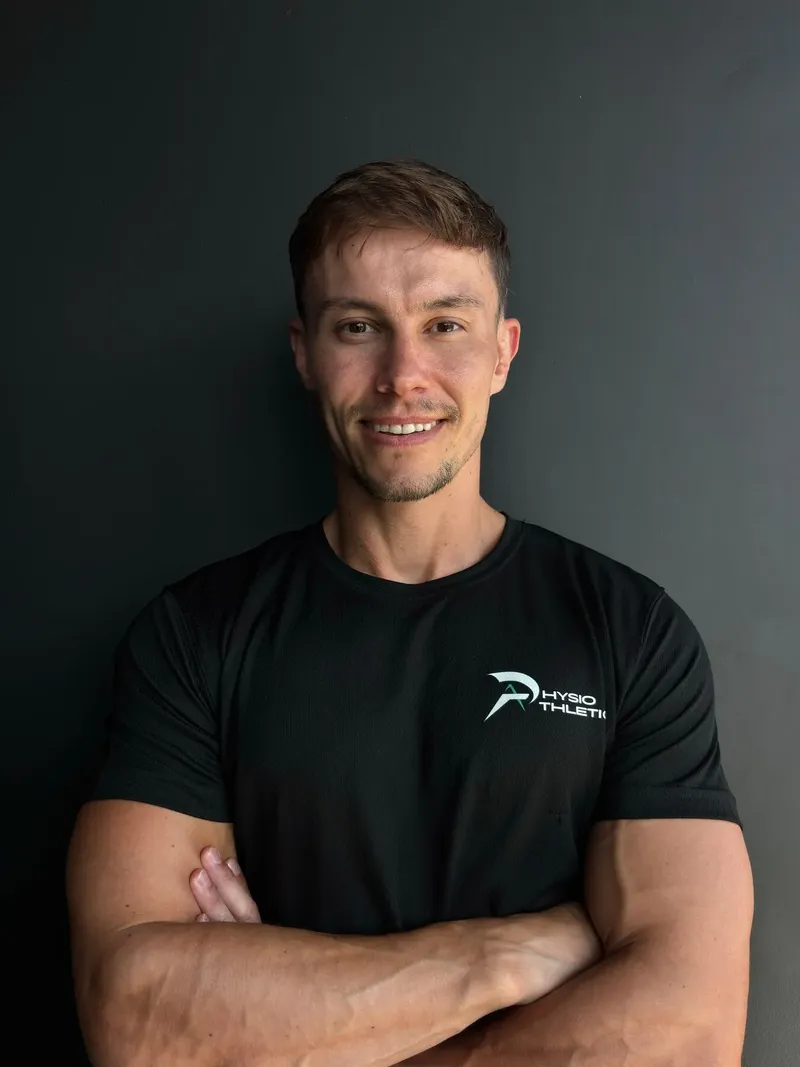
Founder & Specialist MSK Physiotherapist · BSc, HCPC, MCSP, AACP
-
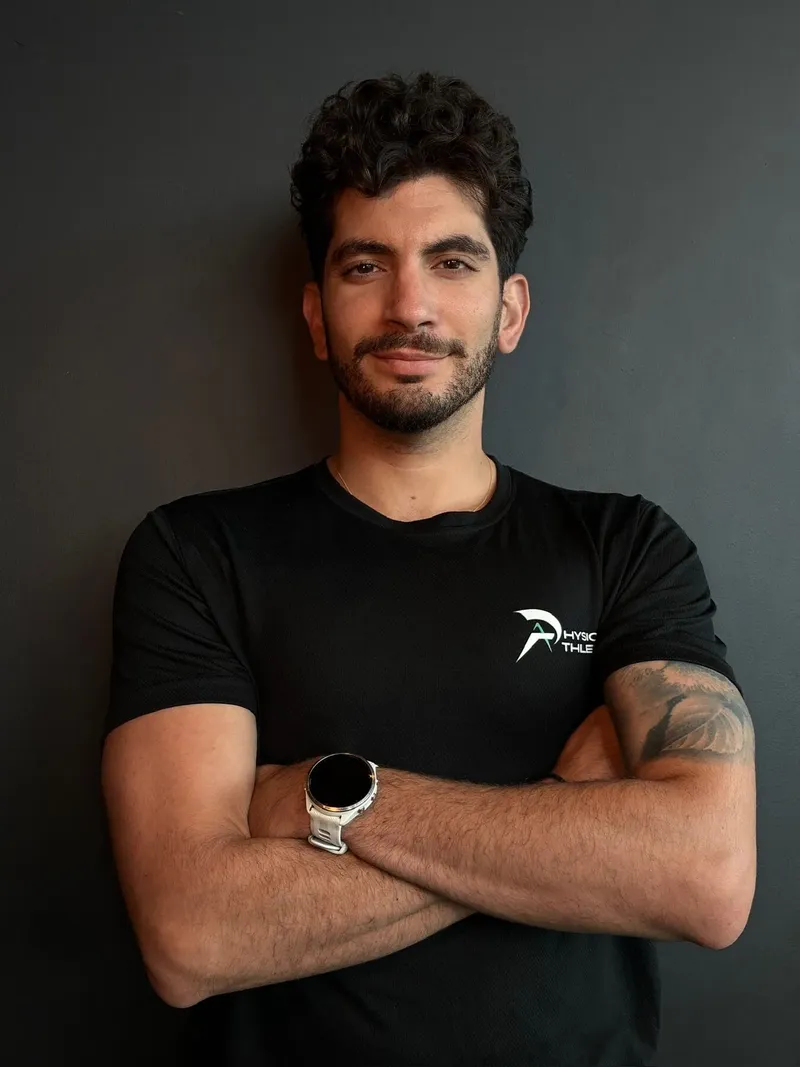
Senior Physiotherapist
Working with your surgeon
After shoulder surgery we follow your surgeon's protocol. If your assessment suggests a surgical opinion would help, we explain why.
Using your health insurance
We are registered with Bupa, AXA, WPA, Cigna and Vitality. Contact your insurer first to get an authorisation code, then book with us and we bill your insurer directly. Some insurers ask for a GP referral before they authorise treatment.

What our shoulder patients say
I was recommended by my consultant to visit Josh for physio, specifically for my shoulder. I had spent over 10 sessions with another physio who took a slow, softer approach to recovery, and as an active individual that was frustrating. After two sessions with Josh, he identified high levels of trap involvement and compensation through my lats. He took time to visually assess my posture, how I make lateral movements, and my shoulder pressing. From this, he identified several areas impacting my shoulder mobility, gave me specific movements to work on, and worked intensely on the shoulder and back. I immediately found less pain during extension and shoulder rotation. I'd highly recommend.
Shoulder and rotator cuff questions
Should I see a physio for shoulder pain?
If the pain has not settled after a couple of weeks, is stopping you training or sleeping, or keeps coming back, an assessment is worth it. Shoulder pain is one of the problems where guessing tends to waste the most time, because the same symptom can come from the tendon, the joint or how you are loading it, and each needs a different plan. You do not need a GP referral to book.
Can a rotator cuff tear heal without surgery?
Many people manage a rotator cuff tear well without an operation, and that is the path most of our rotator cuff patients take. A torn tendon does not usually knit back together on its own, but that is not the same as needing surgery: the aim is a shoulder that is strong and pain-free in the things you want to do, and a structured strengthening programme achieves that for a lot of people. Large or traumatic tears are more likely to need a surgical opinion.
Can I still train with a rotator cuff injury?
Usually yes, with changes rather than a full stop. Overhead pressing and wide-grip work are typically the first things to adjust, while legs, hinge patterns and most pulling can often continue as normal. Training through it in a controlled way is part of the treatment, because the tendon builds tolerance by being loaded. After a repair this is different, and your surgeon's protocol sets the limits.
Why does my shoulder hurt when I lift my arm above my head?
Pain through the middle of the range as you raise your arm is one of the most common shoulder complaints, and it usually reflects an irritable tendon combined with a shoulder that is not yet controlling load well in that position. It is rarely a sign of damage being done. What it does tell you is that the shoulder has less capacity than the task is asking for, which is what rehabilitation addresses.
What is shoulder impingement?
It is the traditional label for pain when lifting the arm, and many people arrive having been given it. It is better understood as a description of a symptom than a diagnosis in its own right, because the underlying problem is usually an irritable tendon and a shoulder not controlling load well. That is a more useful way to look at it, since both respond to a structured strengthening programme.
How long does a rotator cuff injury take to heal?
For shoulders managed without surgery there is no fixed timeline, and it depends on how long the problem has been there and how the shoulder responds. Many non-surgical cases need around 3 to 6 sessions, though this varies. After a repair the shape of recovery is clearer: the sling typically comes off around 7 to 12 weeks, overhead activity returns between 3 and 6 months, and full return to sport and heavy lifting falls in the 6 to 12 month range.
What does rehab after rotator cuff surgery look like?
It is staged, and the early weeks are deliberately protective while the repaired tendon heals to bone. Broadly: a sling and gentle passive movement for the first two weeks, assisted movement from around 3 to 6 weeks, active movement and light strengthening from 7 to 12 weeks, then progressive strengthening from 3 to 6 months. We follow your surgeon's specific protocol rather than a generic timeline.
When can I get back to heavy lifting?
This depends on your treatment path. If you are managing your shoulder conservatively, it varies based on how you are responding. If you have had a repair, heavy lifting typically returns in the 6 to 12 month range, with larger repairs generally taking longer, always guided by testing and your surgeon's clearance rather than the calendar.
Will I get my full range of motion back?
Most patients regain functional, pain-free range of motion, though how close you get to your exact pre-injury range depends on factors like tear size and how your shoulder responds to rehab. We track this with objective testing throughout, and we will always be honest with you about what to expect for your specific case rather than making a generic promise.
What is the retear risk after a repair, and how does rehab help reduce it?
Retear after a rotator cuff repair is a recognised risk, and the research links it to larger tears and to older age. What matters most in rehabilitation is getting the timing right: progressing too quickly in the early weeks and staying too cautious for too long have both been associated with higher retear risk. This is exactly why we follow your surgeon's specific protocol closely rather than a generic timeline, and use testing to guide when you are actually ready to progress.
Do I need a scan?
Usually not to begin with. A clinical assessment is enough to plan treatment for most shoulder problems, and scans often show tendon changes in people who have no pain at all, which can be misleading. A scan is worth it when the result would change the plan, for example after a significant injury or when surgery is being considered. We will tell you if we think you need one.
Can I play tennis, padel or swim with shoulder pain?
Often yes, with adjustments to volume and to the shots or strokes that provoke it, rather than stopping entirely. Serving and overhead shots tend to be the most demanding, so they are usually the last things to come back rather than the first. After a repair, overhead activity, swimming and racquet sports are typically reintroduced between 3 and 6 months, guided by your surgeon's protocol.
How many sessions will I need?
For shoulders managed without surgery, many people need around 3 to 6 sessions, though it depends on how long the problem has been there and how you respond. Rehabilitation after a repair runs considerably longer, over months rather than weeks. We give you an honest estimate after the assessment rather than selling a fixed block up front.
Does insurance cover shoulder physio?
We are registered with Bupa, AXA, WPA, Cigna and Vitality. Contact your insurer first to get an authorisation code, then book with us and we bill your insurer directly. Some insurers ask for a GP referral before they authorise treatment.
Get your shoulder assessed
Most shoulder pain and rotator cuff problems do not need surgery, and a proper assessment is the best way to find out what is actually going on and what your options are.
Whether you are managing your shoulder conservatively, recovering from a repair, or still figuring out which path is right for you, we will build your plan around your specific injury and goals.
Not sure which appointment you need? Call us for a free chat and we'll point you in the right direction.
Getting here
Physio Athletic
Inside Sculpt & Sweat StudioUnit 2 Hoola, 5 Tidal Basin Road
Canning Town, London E16 1UX
- Nearest stations: Royal Victoria (DLR) and Custom House (Elizabeth line)
- Paid street parking nearby
- Please note the clinic is not step-free
Opening hours
- Monday–Thursday
- 07:00–21:00
- Friday
- 08:00–21:00
- Saturday
- 08:00–17:00
- Sunday
- 10:00–17:00